
In today’s evolving search landscape, optimizing your website for organic traffic goes far beyond sprinkling keywords into your content. On-page SEO, the art and science of refining each page of your website, remains one of the most important drivers of search visibility, traffic, and long-term rankings. While search engines like Google and advanced AI search systems now better understand context, intent, and user behavior, many foundational on-page SEO principles still apply but with a modern twist.
In this guide, we’ll break down what on-page SEO is in 2026, the elements you must optimize, and actionable strategies you can implement right now.
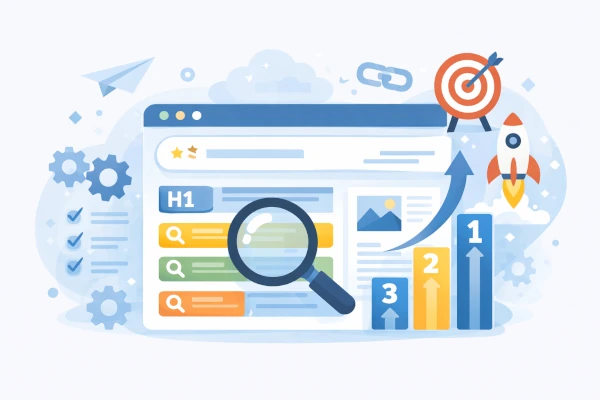
What Is On-Page SEO?
On-page SEO (also known as on-site SEO) refers to the optimization of elements on your own web pages, both visible content and underlying HTML, to improve how search engines and AI understand your content and how users engage with it.
Unlike off-page SEO (which focuses on links, mentions, and factors outside your site), on-page SEO gives you direct control. It includes everything from content quality, headings, and metadata to technical performance and mobile experience.
1. Content Optimization: The Foundation of On-Page SEO
One of the most important on-page ranking factors in 2026 continues to be high-quality content that satisfies search intent. Modern search engines prioritize pages that:
- Provide comprehensive answers
- Match user intent (informational, transactional, or navigational)
- Cover a topic more deeply than competitors
- Address user questions clearly and accurately
Instead of writing for search engines, today’s SEO best practice is to write for people first. When your content meaningfully answers a user’s query and covers related subtopics, it signals to search algorithms that your page is a relevant and valuable resource.
Tip:
Break up long content into clear sections with headers (H2, H3) that both help users scan quickly and help search engines understand your structure.
2. Strategic Keyword Placement
Even in an AI-influenced SEO world, keywords still matter, but context matters more than quantity. Modern on-page SEO avoids “keyword stuffing” and instead emphasizes natural usage and placement of relevant terms.
Here’s how to optimize keyword usage:
- Include your main keyword in the title tag, URL, and first paragraph
- Use secondary (related) keywords naturally throughout the page
- Use synonyms and semantically relevant terms (helping AI understand topic depth)
Rather than obsessing over density, focus on using keywords where they make sense logically for the reader.
3. Optimized Metadata: Titles & Descriptions
Metadata, specifically title tags and meta descriptions remains essential for on-page SEO:
- Title Tags: Summarize the page’s core topic in a concise, keyword-aligned way (ideally 55-60 characters).
- Meta Descriptions: Influence click-through rates by presenting a compelling reason to click (even though they don’t directly influence rankings). Keep them between 150-160 characters.
Search engines use metadata to understand contextual relevance, and users base click decisions on it so optimize both for clarity and intent.
4. Headings & Structure Matter More Than Ever
Search engines and AI systems rely on heading tags (H1, H2, etc.) to parse content structure. Each page should have one H1 (the main title) and logically placed subheadings that improve readability and help search algorithms interpret your content hierarchy.
Headers also give you natural places to include important terms without forcing them into the body text, improving topical relevance and semantic depth.
5. Internal Linking: Spread Authority & Boost Navigation
Internal links, which are links from one page on your site to another, help search engines understand your site’s hierarchy and distribute authority across pages.
Good internal linking:
- Helps users discover related content
- Signals page importance within your site’s architecture
- Improves indexability and session engagement
Use descriptive anchor text (the clickable words) that hints at the content of the linked page. This helps both search engines and users.
6. URL Structure & SEO-Friendly Formatting
A clean, descriptive URL helps search engines and users understand what a page is about before clicking:
- Keep URLs short and readable
- Include relevant keywords
- Avoid unnecessary characters or long strings of random text
For example, a URL like /on-page-seo-best-practices is easier to interpret and aligns with search queries compared to a complex dynamic string.
7. Mobile Voice & User Experience Signals
With mobile traffic dominating web usage, mobile-friendly design is no longer optional. Google’s mobile-first indexing means pages that perform well on mobile devices are more likely to rank well.
Beyond mobile responsiveness, user experience (UX) elements such as clear navigation, readable fonts, fast loading times, and logical layout contribute to lower bounce rates and better engagement, which indirectly improving SEO performance.
8. Page Speed & Core Web Vitals
Page performance directly influences both search rankings and user experience. Core Web Vitals, which is a set of metrics focused on loading performance, interactivity, and visual stability, are official ranking factors.
Slow pages frustrate users and signal poor UX to search engines. Improving speed (through image optimization, caching, and efficient code) is essential for modern on-page SEO.
9. Multimedia Optimization: Images & Videos
Images, videos, and other media enrich content, but improperly optimized media can slow down page speed and hurt rankings.
Best practices include:
- Compressing images to reduce file size
- Adding descriptive alt text (important for accessibility and SEO)
- Using video snippets when relevant
Alt text not only improves accessibility but also gives search engines context about what the media contains.
10. Structured Data & AI Answerability
Modern search (especially in 2026) isn’t just about traditional rankings, it’s about getting noticed in rich results and AI answer displays. Structured data (schema markup) tells search engines what your content means, enabling rich features like FAQs, how-to boxes, product snippets, and more.
By implementing structured data:
- You help search engines interpret content semantically
- You improve your odds of appearing in enhanced search features
- You make your pages more “AI-ready”
While not always a direct ranking factor, schema increases visibility and CTR.
Final Thoughts: On-Page SEO Is a Human + Tech Balance
At its heart, on-page SEO in 2026 is about making your content both helpful to users and understandable to machines, from traditional search engines to AI-powered search interfaces. While Google and other platforms become more sophisticated, the fundamentals remain the same: satisfy user intent with relevant, high-quality content, optimize technical elements, and create content experiences that users and search systems value.
By focusing on these modern on-page SEO techniques, you give your website the best possible foundation for visibility, relevance, and lasting organic growth. For businesses that want expert support, RankUpped offers dedicated On-Page SEO services designed to optimize every critical element of your website, from content structure to technical performance. If you’re ready to strengthen your rankings and improve user experience, RankUpped can help turn your website into a powerful growth asset.
Leave a Reply